Discover Financial Services
Payment Programs
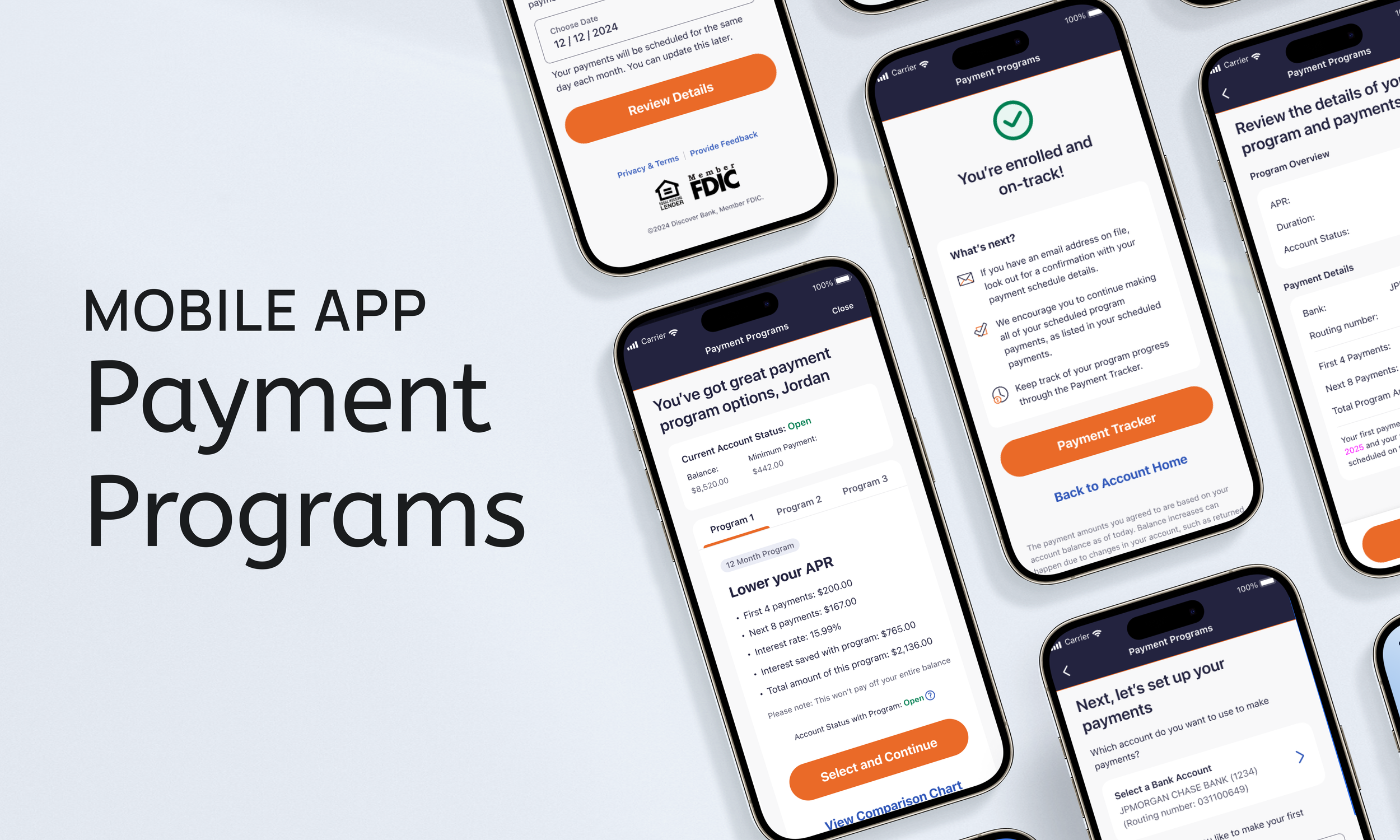
Project Overview
Founded in 1985, Discover Financial Services is a leading digital banking and payment services company. In 2024, Discover processed approximately $622 billion in transactions across its payment networks, including Discover Network, PULSE, and Diners Club International, serving 330MM customers.
Team Makeup
My role: Project Lead
1 Principal Designer & Content Designer
1 Design Researcher
BA & Product Owner
Mobile Development team
Details
Program timeline: 8 months
Collections & Repayment
Regulated Financial Space
The Challenge
The goal: bring the full payment plan experience into the Discover mobile app in a way that feels native, intuitive, and supportive during what can be a stressful financial moment.
Customers who fall behind on their Discover credit card payments were only able to access payment plans through the website. Discover has a strong mobile customer-base, and this disconnect creates friction at a time when users are most vulnerable. Not native mobile access potentially increase the risk of charge-offs.
Our goal was to close this gap by bringing the experience into the mobile app, with a north star metric of unlocking up to $17.5M in annualized profit before taxes through improved engagement and enrollment in payment programs.
The Scope
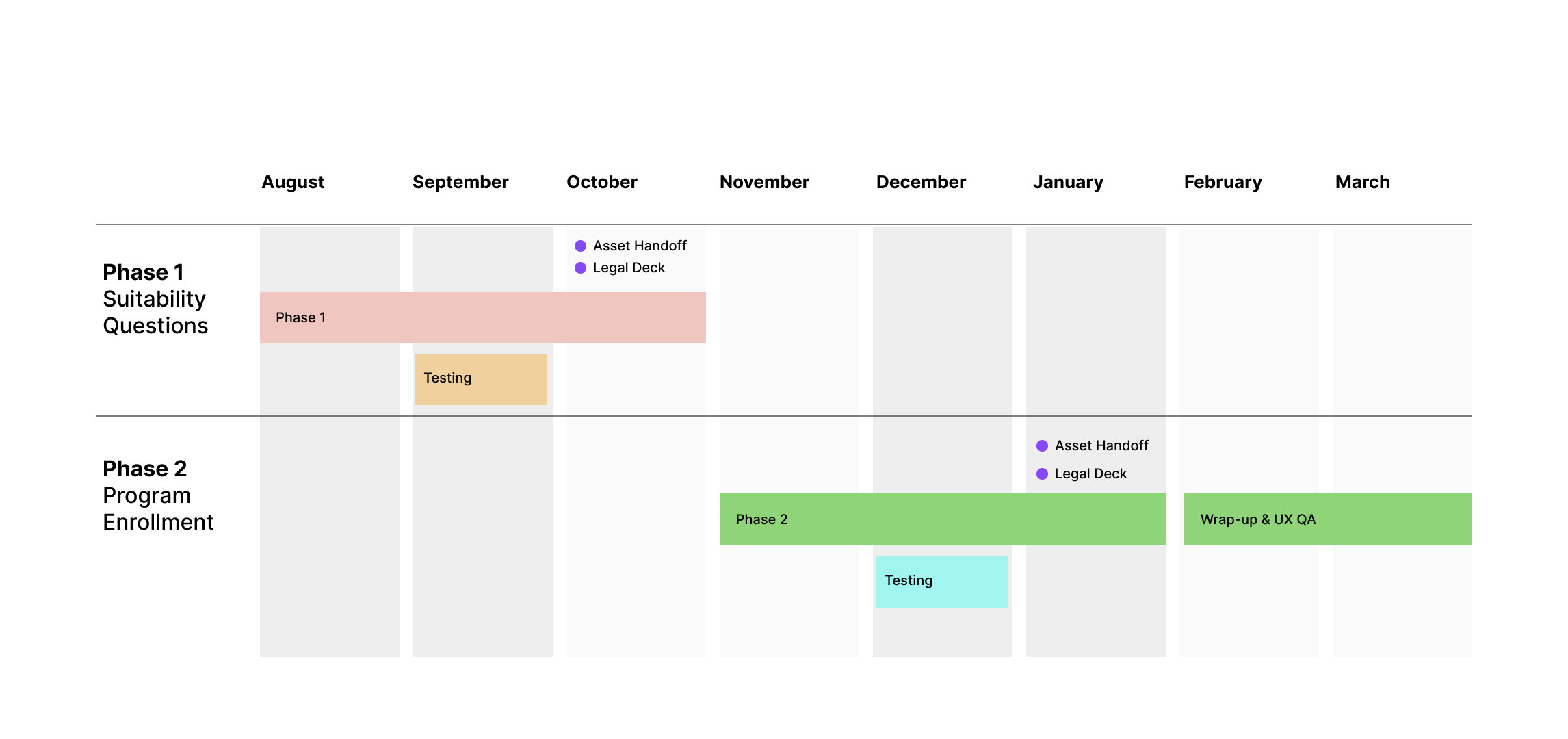
I collaborated with the business and engineering to come up with a staggered phased plan to expedite delivery.
Phase 1 Update legally required suitability questions. Users must complete these before viewing their repayment offers.
Phase 2 Plan selection and enrollment. This phase is designed to help users evaluate their options, understand which plan best fits their needs, and confidently enroll within the app environment.
Flows & User Journey
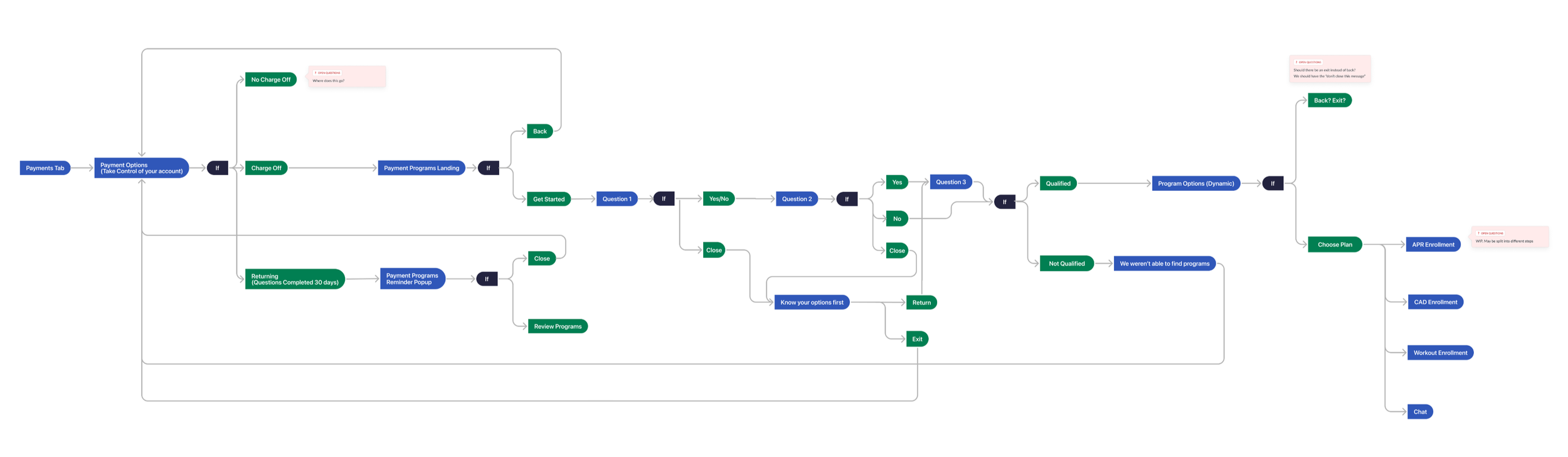
Led the team to create an abstracted overview of the Payment Programs user experience.
This was done to: 1. help design team to build empathy on the overall experience and think beyond the narrow scope that was tasked to us by our partners, and 2. align partners on the program details.
AI Considerations
Edge case mapping: With multiple delinquency states to design for, AI could have helped surface and stress-test edge cases earlier in the process.
Phase 1: Suitability Questions
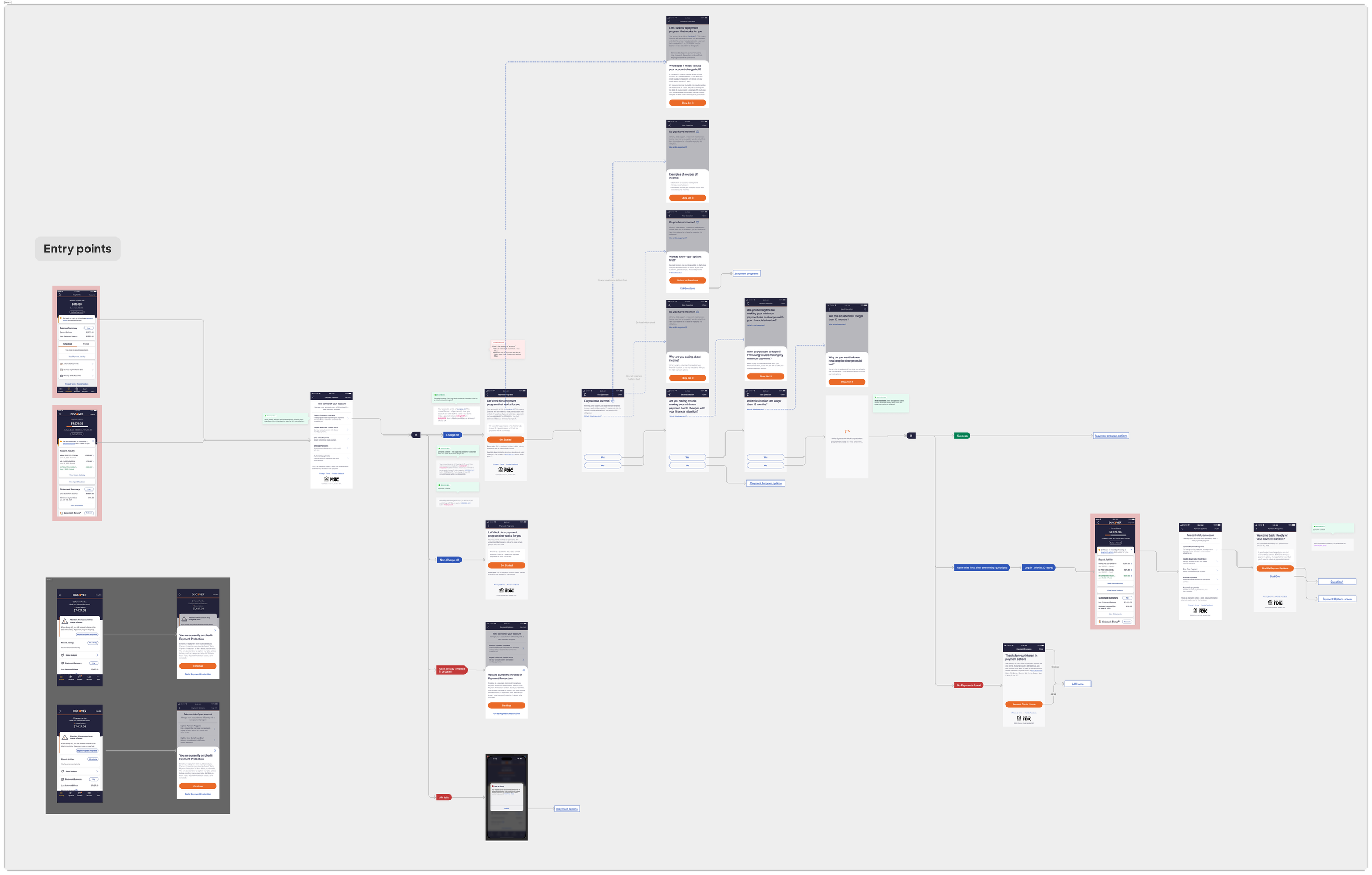
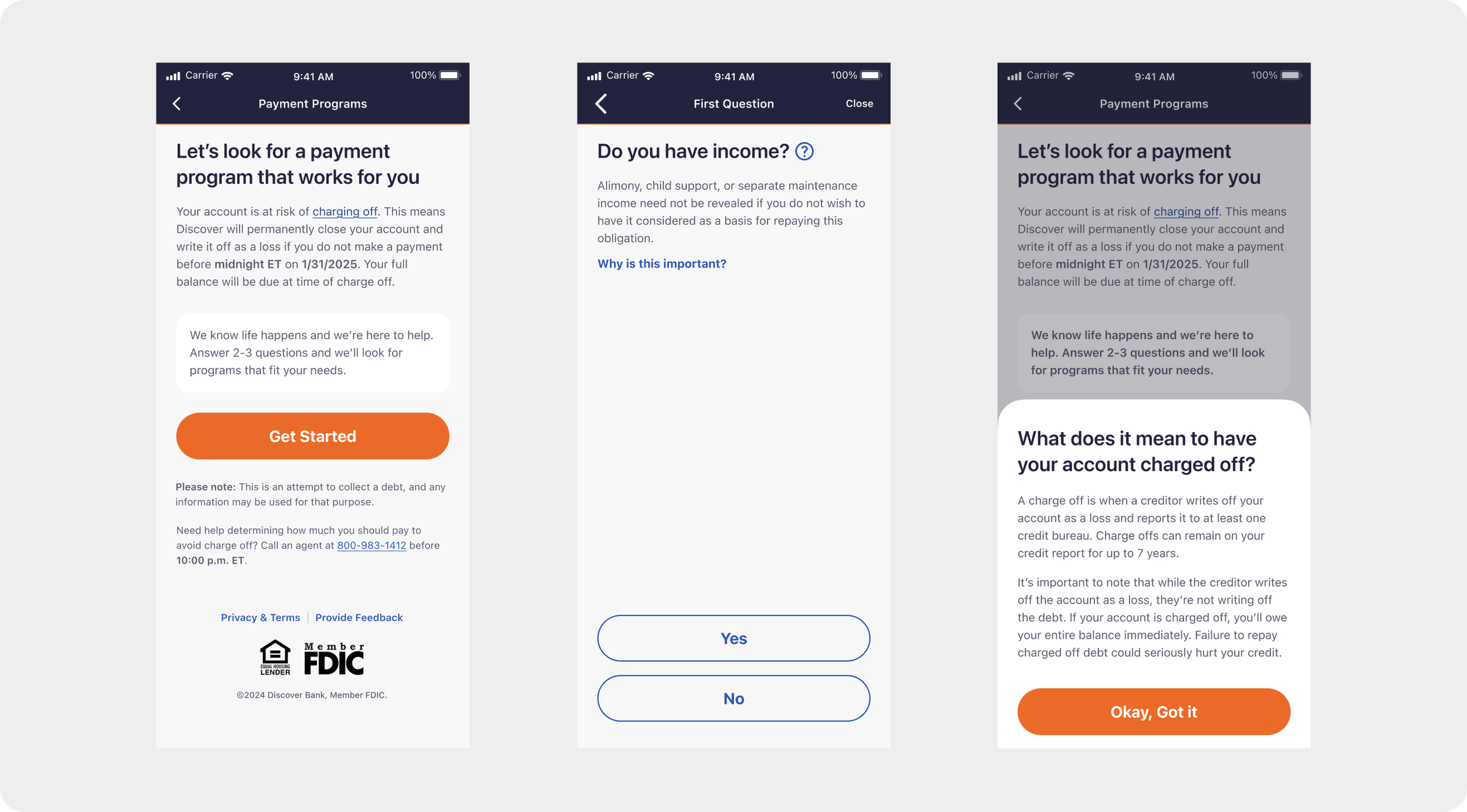
Due to legal requirements, customers were required to answer 2 to 3 suitability questions before viewing their available payment plans. While we couldn’t remove these questions, we used clear typography, visual hierarchy, and contextual “read more” content to improve comprehension and reduce friction.
We designed the suitability section as an overall flow, not isolated screens. This exercise primed us with some quick understandings of the collections world and expedited the redesign of the suitability questions.
Knowing from past user testing that many customers didn’t understand why they were being asked these questions, we partnered closely with content design to address those pain points. This helped built a strong case for eliminating the questions altogether in the future.
Phase 2: Program Enrollment
The team designed with the pillars of simplicity, clarity, and quick comprehension, values that are central to Discover’s brand and critical for users in distress.
Building with Systems in Mind
Discover has robust Design System in place, and they are open to design contributions. We partnered with the systems team to craft reusable components — including:
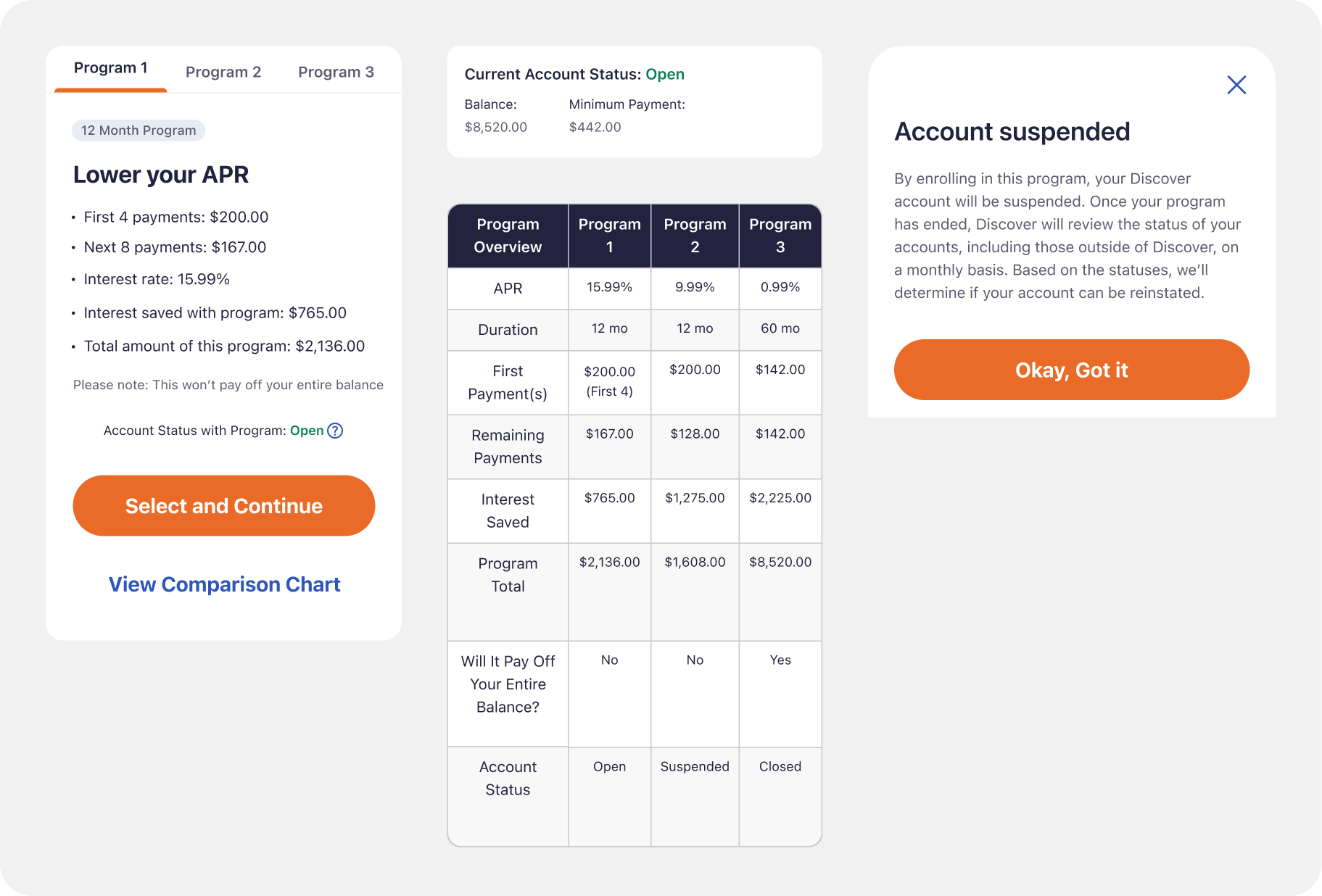
Incorporating tabular elements into the plan card
A chart-style layout optimized for small screens
States for various delinquency levels, so the experience adjusts based on customer eligibility
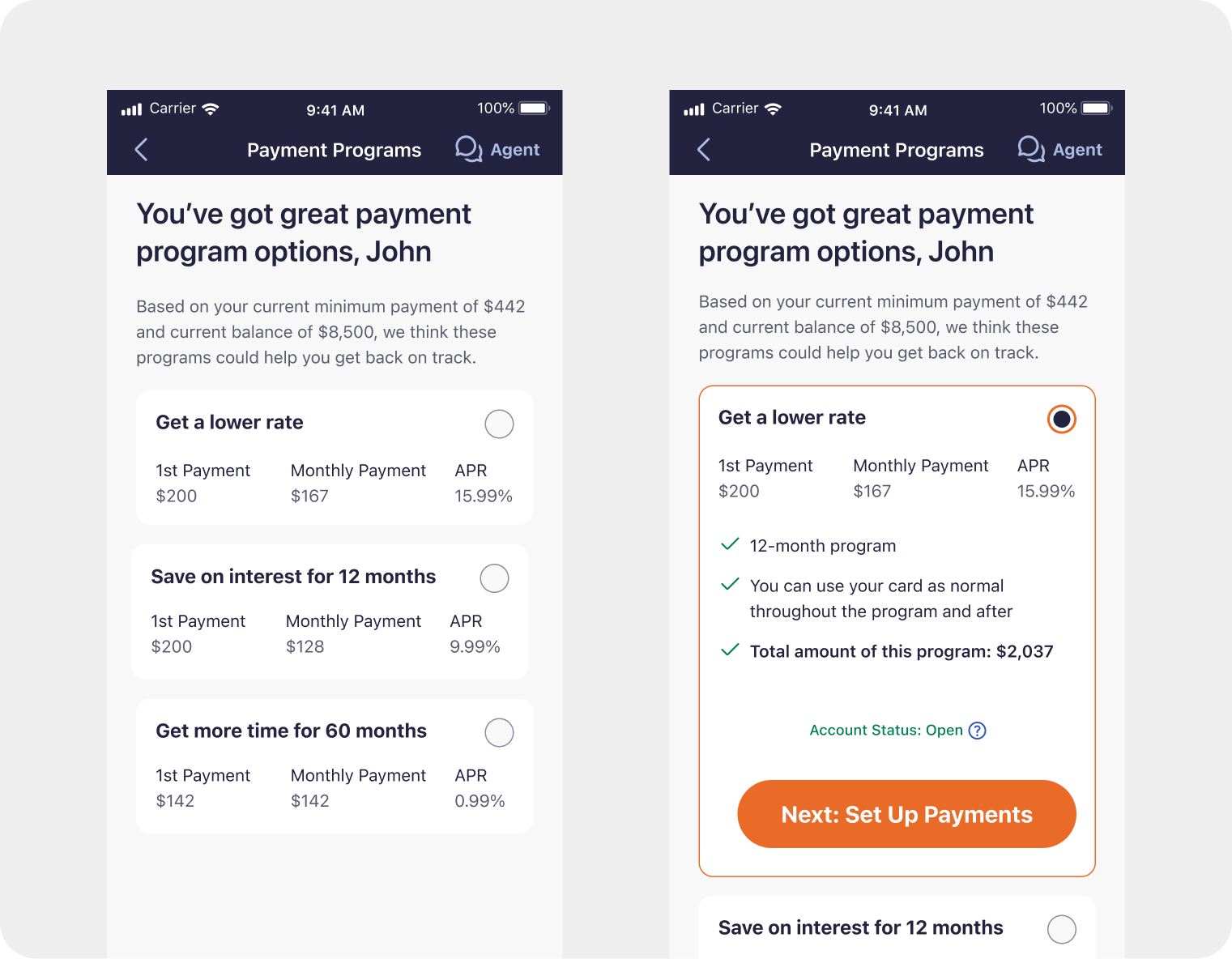
Test 1: Radio Buttons
Key decisions:
Introduced a Quick View comparison chart allowing users to scan payment options side by side
Created a flexible, mobile-first component in partnership with our design system team that displays duration, monthly amount, and total repayment
Worked closely with engineering to map the UI to backend APIs, ensuring the correct data auto-populates without friction
User Testing & Iteration
Over the course of 2 weeks, we conducted iterative, moderated user interviews to evaluate three distinct interaction models for program selection: radio buttons, stacked offers, and tabbed offers.
AI Considerations
Rapid prototyping: AI-generated variations of the three program selection models, whether it’d be radio buttons, stacked options, or tabs.
Research synthesis: AI-assisted pattern recognition across the moderated interview data would have accelerated how quickly we identified the winning UI direction.
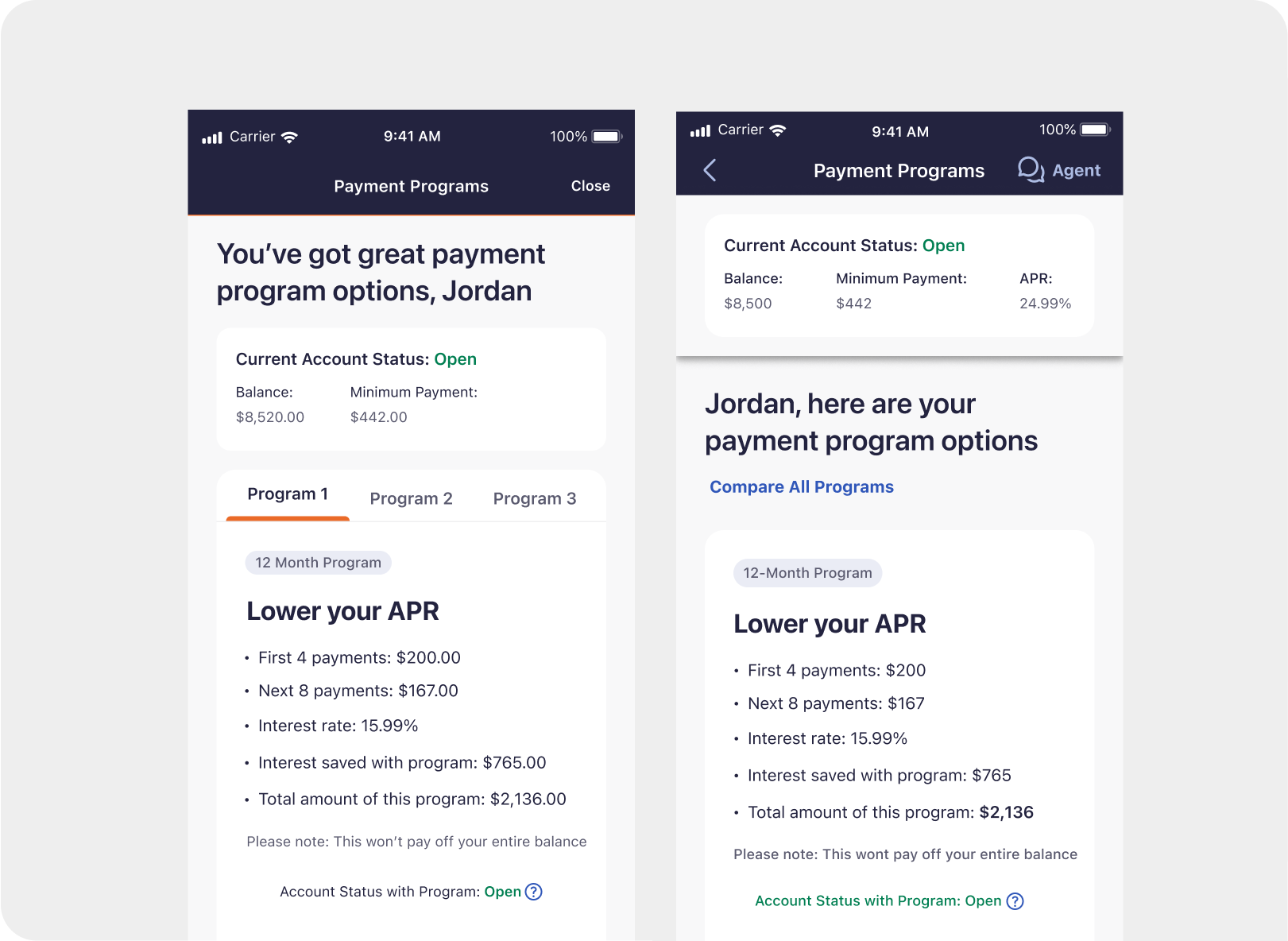
Test 2: Stacked Options vs Tabs
Testing outcomes:
Of the three UI variations tested, the tabbed layout outperformed the others in both usability and user preference. Participants found it easiest to navigate and compare plans within a single view. Based on the overwhelmingly positive feedback, we prioritized keeping the comparison chart in the final design to support informed decision-making and maintain user confidence during selection.
Final Product and Results
The complete Payment Programs was handed off in Q3 2025 and launched in Q4 2025.
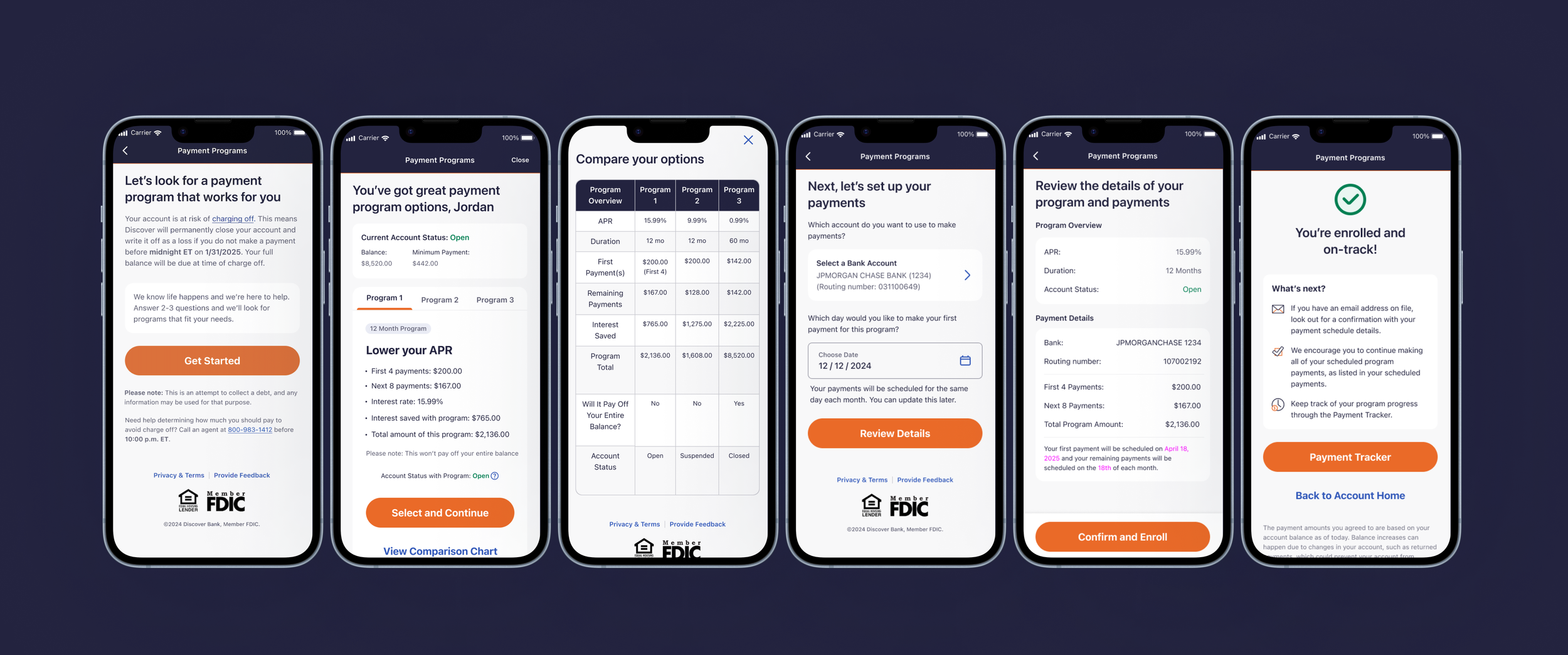
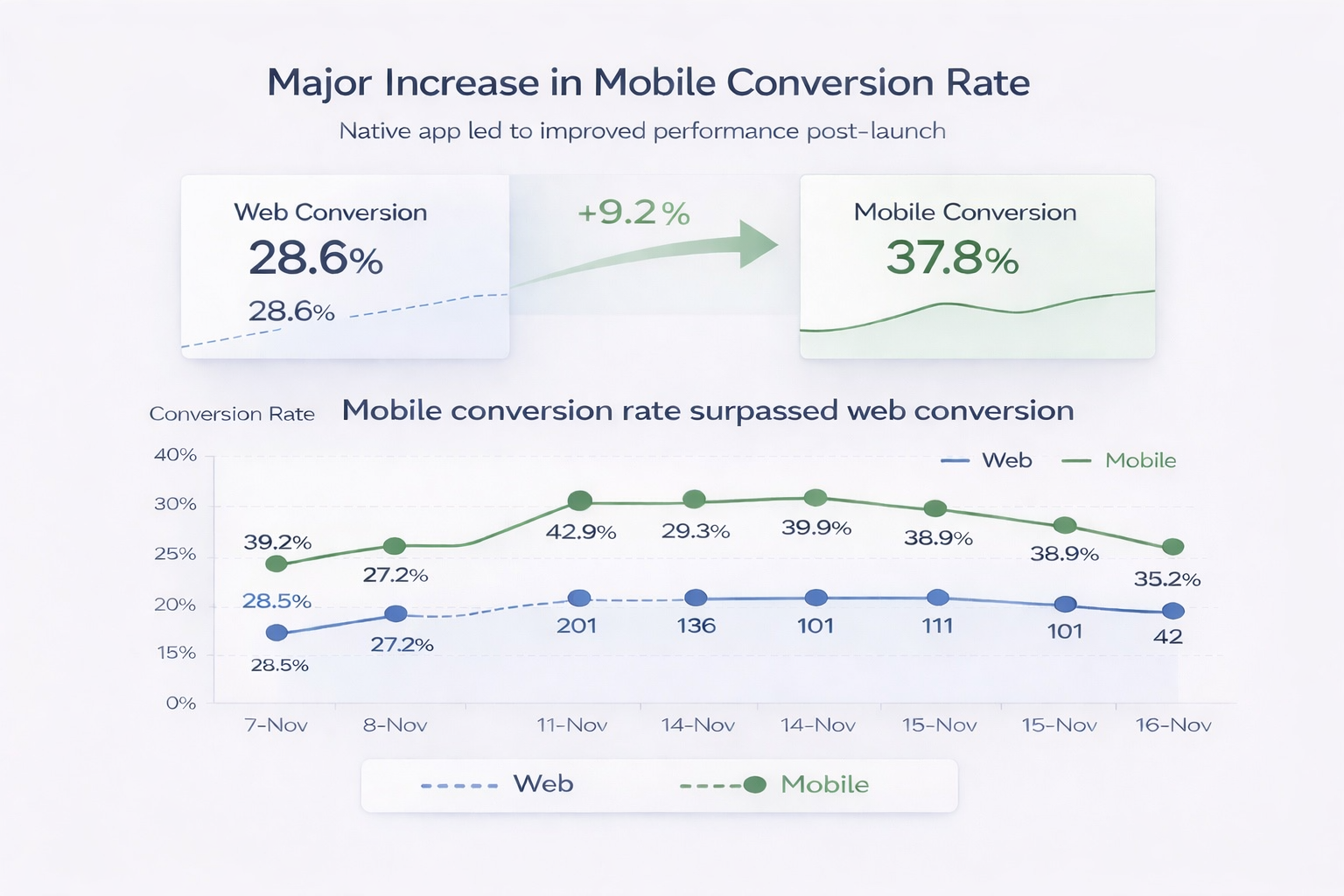
Once launched, mobile conversion surpassed web by +9.2 points, reaching 37.8% compared to web’s 28.6%. The sustained performance gap highlights the effectiveness of the mobile-first design in reducing friction and improving completion rates.